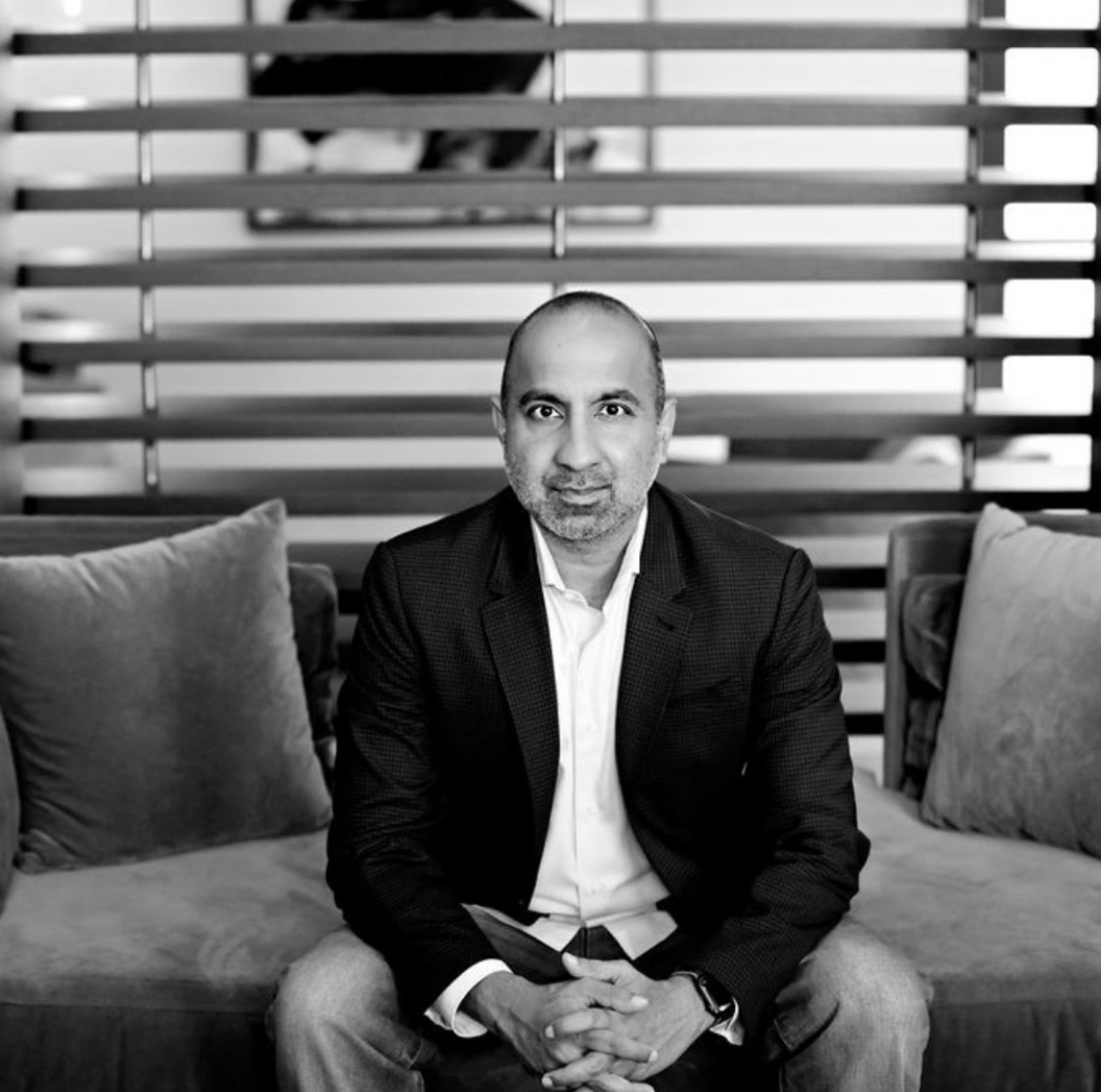
Hello my friends, and welcome to another episode. I'm so excited to have you here. I'm really excited because I have my dear friend Dinesh Milani on the show. And how do I introduce the man, the myth, the legend. , If you look at his like, you know, classic bio, we can call him a patent attorney, a partner for nearly 20 years in a Washington DC law firm, and now a children's book author, a coach. So many things, a former law professor, and one of the reasons I wanted to have him on is because you cannot reduce this man to a bio. He is, I, I wouldn't even say a jack of all trades because like, you're like the master of all trades. You do so many things and you do them so well. And I wanted to have you on for a very specific reason because obviously people that listen, often I interview people, I interview quitters, and that's our thing. We love having people that have quit one thing and then go on to do something else. But I really wanted Dinesh on because I wanted to show another side, because I don't think that you necessarily have to quit. And I think if you've been in any of my programs, [00:01:00] we talk a lot about that, about figuring out what works for you.
And some of you really do love your careers and you just wanna find a different way to manage it. And you wanna have really interesting, exciting lives outside of work and you wanna try different hobbies and there's so much more possible than I think that we all accept in our current society. I think we've all just accepted that.
Well, there's limited amount of time and I have this job and I have a family, and so I can't do anything else. And. you're around here, you know, all I talk about is a mindset, and so I think that mindset is what limits a lot of us, not the actual ability or time or anything like that. And I think Dinesh is the perfect example to dispel whatever beliefs you have about what you can get done in the time that you have.
And so thank you so much for joining me today, Dineh.
Oh my God, you are so generous and so kind. I'm so excited to be here. And you know, I heard everything you said, but you left out One critical part is that I found you before COVID in [00:02:00] 2019 by listening to one of your podcast episodes. Right. And then, um, you have been. A source of inspiration, an example for everything that I have been able to build for my life in just six years or seven years time.
And I know you've had a front row seat because we've become really good friends. So this is, this, being on this podcast is the culmination of my full life experience. Like this is it. I'm so excited.
You are too kind. This is just gonna be an hour of me and Dinesh just selling each other, how much we appreciate and love each other. Um, very, very sweet of you and I am honored to have played a small role in this journey. And I, and I think that, you know, there's so many bad things that are said about social media and, you know, the internet and all these things, but one of the most beautiful gifts that I have gotten from this experience, from the podcast, from social media is. You know, having people kind of find me and then become [00:03:00] really good lifelong friends. And so that is what has happened with Dinesh and I, and I, and I couldn't be more grateful that this podcast kind of brought you into my life. So I appreciate that and I appreciate you. And so I wanna jump in. So usually I talk to people and then when you, you've listened to the podcast, you know, I talk about like where what they started with.
Yours is a different situation. But why don't you start by telling us like what your. You know, kind of maj the, the main career that you've had for the last 20 years or longer. Uh, tell us what, you know, how you got into that and what you do, and then we'll talk about all the other things as well.
Yeah. So I'm a patent attorney. I'm a partner in a law firm in d. C that me and a couple other partners we started in the 2012 timeframe. And that's my main career. That's my primary source of income. And I've been doing that full-time and I'm, you know, glad that I'm doing it. I'm not trying to leave that career.
I'm pushing myself to grow a bigger practice and to create opportunities for junior attorneys. And, you know, people ask me for speaking [00:04:00] engagements, but I bring along a junior attorney so they get exposure, and that is, that is a hundred percent of my focus. But somewhere along the way.
Along the
We had kids, you know, very through a very difficult process.
And it started in 2015 when my, we were pregnant with my son, and I sort of looked in the mirror and said, I'm about to announce and articulate. What is the right way to live? And simply like, put your shoes away, right? But I myself wasn't doing that, so I started to feel like a bit of a hypocrite. Like, I'm gonna tell my son to go to bed early, eat well, focus on school, don't do all this stuff.
But here I am at one o'clock at night feeling that I need to open a beer and watch TV because I've had a hard day. Right. So that kind of started, that got me into fitness a little bit, got me to question my identity, like, okay, I'm crushing it, I'm doing well as a patent attorney. Is this it? And then at the same time you start thinking about, you know, [00:05:00] building a, a building wealth for your family and what are you gonna leave?
I started to realize that I sort of had a big job even though I was a law firm partner. If I, and what I mean is if I stopped working, my income stopped. And you know, in the United States if you're a non-lawyer, you can't own a law firm. So there's no selling your business right and getting a big paycheck at the end.
It is literally show up for service and get paid. It's fee for service, right? And so. That's kind of what started all of this. And then I went on to a a journey of really discovering what other people were doing, and that's how I found you. I went to Tony Robbins and I started to understand the power of relationships, the power of mindset, and not wanting to be defined by a single identity that was no longer servicing or serving me.
Perfect.
Yeah, that, I love that you, articulate what so many people actually feel, and I [00:06:00] actually wanna talk about that for a second because I think a lot of people get to what, where you've gotten to, which, you know, by society, Sanders is like, you've made it there. You know, like you are there, you are a quote unquote, you've, you're a success, you're a partner at a law firm, you have a high paying job. You've done it. And I think a lot of times, because humans are meant to evolve and we all kind of want to con continuously grow or change, or you, especially if you're somebody that makes it to the point of reaching some goal, you're probably a high achiever. You're somebody that likes to be goal oriented and get to the, you know, end goal. And so then of course you're gonna want something else. But I think a lot of people get stuck in. Feeling bad about that. Like why can't I just be happy? Why can't this be enough? Like even when you said this question like, is this it? I think that is such a common question for so many people that work towards something and then get there and they're like, okay, like this is great.
There's a lot of great things about it, but this can't be it. And then they feel guilty and they feel ashamed that like, why can't I just be happy with this? Why [00:07:00] can't I? And so. Maybe talk a little bit about like how your mindset kind of differed instead of like getting down on yourself and, know, or shutting that down to be like, you know, no, I, it's fine.
I can just like try to force myself to be happy here. You sort of decided like, well, now is the time to kind of seek what that more is.
Yeah, that's a good question and I, I don't want you to think I had a different mindset and I didn't get down. I did get down, I, I watched myself sort of get comfortable. Start to go from being excited to just getting through my day. I had the Monday morning scaries, right? I had the Sundays where I didn't feel like working.
And people were telling me that, you would not, uh, sort of feel ever complete because you're not satisfied, right?
Yeah.
You're always gonna be chasing things and you're never gonna be happy. So, um, I did feel all that. And then ultimately. I sort of got to a place [00:08:00] by listening to a lot of, you know, mindset podcasts, working with Tony Robbins, talking to you, quite frankly, working with Brooke as CEO and Robin Sharma and John Maxwell, and I got to the place that I needed to have my own back and I didn't.
I didn't relying on what other people were telling me or what I thought should be the answer, which is you get someplace in the Crystal Palace and you're supposed to be happy because you're king of the land and you're everything. And then you sort of listen to every fairy tale. And the princess is unhappy, right?
And. Right. And you think about, you know, someone who is s solitude and, but at the very height of their, their career or whatever, and they're lonely, right? You hear about Taylor Swift or Tom Brady or Michael Jordan saying, I can't just sit down and have lunch somewhere because people are bothering me.
So I was like, you know what, I'm gonna put all that noise set aside. And what does give me a lot of happiness, and by the way, it also allows me to engage back [00:09:00] into my family and my law firm at a high level, is to just pursue every hair-brained idea I have and just try it out. And if I wanted to do CrossFit, I'll go do CrossFit.
I wanna do boxing, I'll do boxing. If I wanted to go to this real estate conference, I'll go to this real estate conference and um, just try it and see what happens. And if I don't like it, I can quit it. So that, that sort of took me to the buffet of options in front of me and I didn't feel stuck at, um, at, you know, a pizza restaurant when I no longer wanted pizza.
Yeah, I love that. But let, I wanna talk about how you got to that mindset, because I think so many of us get in this head space of like, is this gonna be a waste of time? Like let's say, and. If we go through everything Dinesh is, has been doing or has done, or every hair brained idea as he calls it, we'll be here for four hours.
But like you did get into real estate investing and then you did go get your coach certification and you did coach, and we'll talk about that. And you [00:10:00] started a podcast and then you recently, I think you guys put that on hiatus and you now wrote a children's book and you've done so many things in the last six years, right?
Or I think the real estate was probably predated that. But I, I think that a lot of people, and this, this is why I love the way that you approach this, is because. So many of us stop ourselves 'cause they think like, well, I don't know if I'm really gonna become like a children's book author or if that's gonna go anywhere and I don't want it to be a waste of time.
Right? Like, I'm gonna put all this time and energy learning how to write a book and writing one and publishing it. And doing all this is gonna take me a year, two years, or however long it takes. And then what if I don't wanna do it? Right? So then they get stuck and like, I gotta find the thing that I'm going to do forever where there just is no thing.
And so how do you allow yourself you know, approach things as like, well try it. If it doesn't work and it's not a success, or I don't like it, then I'll just try something else.
Yeah. So there's an equation that I run in my head, and on one side is perceived effort and the other side is perceived benefit. And as human beings, [00:11:00] we're very good at identifying the. Seeded effort because that's pain, right? That's how hard we have to work. That's how long it'll take. That's how much money it we will have to spend, and we're very good at perceiving loss and pain, right?
Like a, you buy a stock, it goes up to a hundred. You're like, great, I made 80 bucks. It comes down to 90. You're not thinking about the 70 you made. You're thinking about the 10 you lost, right?
yeah. Yeah.
side of that equation is a perceived benefit. Now, similarly, like we're very good at, uh, you know, calculating the perceived effort, we're awful, absolutely horrible as human beings calculating the perceived benefit, right?
Mm-hmm.
look at the benefit sort of in a very proximal way of, am I gonna make more money or I'm gonna get more opportunity? We don't think about all of the tangential related benefits that might come from it. And so we we're constantly making this calculation, and if the perceived benefit doesn't outweigh the perceived effort, we're stuck.
We're stuck in sunk, sunk cost fallacy, and we're like, oh, it's not worth it. What's the [00:12:00] point? Why should I do that? It's not worth my time. So what I tell people when I used to coach was like, okay, if I told you you're gonna spend a year writing a children's book and then you'll make a hundred million dollars on the other end, would you do it?
Yes. The answer is obviously yes, but I've not changed anything about the effort on the children's book. I've just told you what the payoff could be. Right? And so things like getting on social media, starting the podcast, doing real estate, writing, the children's book, all of those have within them the seed of something great.
And it doesn't have to be life changing to be something great. It could be a great relationship that we've met, like you and I met when I got onto Instagram, right?
Mm-hmm.
Writing the children's book has allowed me to make some significant donations to schools outside of the country in a way that is very meaningful that I wouldn't be able to make before.
Right?
Yeah.
Um, and so try to calm that. That noise on the other side of like, Hey, there's no benefit for you. Why would you do [00:13:00] this? It's not worth your time. And just sort of throw coffee, wind, and say, there is gonna be a benefit. I just can't figure it out right now. And we'll see what it is when it comes.
I love that so much, and I think, and that's a lot of what I coach people on is in and in addition to even, like, there's so many unforeseen benefits that you will, that you can't anticipate. Like you said, you know, the relationships you make or the things that you learn, but there's so much growth and skill and change that happens in just pursuing, even if it goes nowhere.
You know, I, I talk about that a lot. Even with the podcast or my business or whatnot, or when I did my photo booth business, that didn't really go anywhere. I, I talk a lot about how like, had I not done that, I wouldn't have done this. Like, there was so much confidence that was built in the fact that I was like, oh, I figured out manufacturing and I figured out hardware and I figured out like, clearly I can figure this stuff out.
So. the time came for a podcast, I was like, I mean, I figured all this out. I could figure out a podcast that can't be that hard, you know? And so it just, it, it, it's these things [00:14:00] that are maybe not even tangible or like, there's just these skills that you learn. There is confidence in yourself. There is, you know, for me it's a lot of like, and I'm sure you feel this way, even with the book, it's like, what am I modeling for my children?
There's so many benefits that come outside of like, what is the end goal of this thing?
Yeah, and so let me give you a couple concrete examples. I'm thinking of 'em right. About how it ties back to the current life that you're trying to amplify. So we had the podcast, we put it on hold. My, you, as you know, my parents have really bad health issues, so I'm traveling a lot to them, so I'm not able to be in my studio.
So we put it on hold, but, um, I got introduced to one of the biggest names on the planet for law firm work. I can't tell you who it is, but if you think Michael Jackson, you're not thinking big enough. Okay. So
Okay.
I introduced to one of these, uh, celebrities to do their patent work. And I'm talking to their sort of right hand person about, Hey, can we do your patent work?
And they look me up on [00:15:00] LinkedIn and I put on LinkedIn that I have a podcast and sometimes we put guests and we tag them. And this right hand person of this celebrity says on the, on the pitch call, wait, you have a podcast? I was like, yeah. And feeling kind of sheepish, like, oh my god.
Yeah.
And they go, my husband has a podcast and you should totally check it out.
I'm gonna check it out. And next thing you know, they're listening to my podcast. And before you know it, we got a brand new client at the law firm because of this chance, serendipitous connect of someone who is married to someone who is a creator, understands what kind of person does that. And like you have a method inside of you and it just totally works out right.
Amazing. And that brings up something that I actually did wanna talk about 'cause I don't wanna gloss over as if these things are like super easy for you to do. What's really fascinating about that is when we first met and you were first starting out this stuff, you had a really hard time putting yourself out on social media or the idea of a podcast because [00:16:00] you were so afraid of like. You know, what are my clients gonna think? Like I'm this serious lawyer and like I, how can I be doing social media? What is my firm gonna get upset that I'm doing this? And so I don't want people to think that, like, none of that stuff that you're just like, la, la do. I'm gonna start a podcast and everything is easy.
Like you went through a really. long period of time where you didn't put things out, where you didn't start the coaching business because you were afraid of that. Which I would love for you to talk about a little bit how you kind of got over, but I just love the like full circle. Like this thing that we think is gonna be so scary or people are gonna judge us, like ends up becoming the thing that, you know, lands you a really big client.
It's amazing.
Yeah, absolutely. And you know, I think we all go through a level of maturity and evolution, and I don't want us to leave the message that you, you have to skip that stage. I think that you can bridge your way to, to being comfortable, which, which is what I did. And I'm not, I don't regret bridging my way because it allowed my mentality to catch up to [00:17:00] where I was.
And so, yeah, I, um, you know, I'm, I, I, I'm not, I don't say this from police of ego, but a lot of clients Google me, right? They look at law firms,
Yeah.
have clients all around the world. I have 13 partners. And when I started to put myself on out on social media, I did it under a pseudonym, right? A pen name.
Daniel, it's always been like my American name. And people call me D Meow and my friend, so I was like, Daniel Mellow. Right. And I started an Instagram, and I'm not the only one. The, the managing partner of a very large firm has a TikTok under a pseudonym. Okay.
Funny.
It's, it's great. It's a great bridging way.
But I was concerned and I said Hey, my partners are gonna think that I'm getting ready to leave or I'm distracted. My clients are gonna think that I'm not fully engaged and I'm getting to leave. Right. And you know, you always think about someone who starts something else and that means they're gonna leave.
And so, but what I tried to [00:18:00] do is not plan to leave, but it made me more effective at my job and my. Actual legal practice and my contributions to the law firm went horizontal because what was happening, I just wasn't moping around, like, oh, I gotta do this. Let me eat some candy, or I gotta do this. Let me do it after I work out.
Or let's go for a walk around the block. Right? Lawyers like to go for. It just made me super effective and the what I could get done in three hours at 50%, I'd get done in an hour and a half at 200%. Right.
Yeah.
And going back to your, your actual question, I did start out at, on a pseudonym and I was scared, all that stuff, even from like our friends and family people were like, what's.
Doing on social media? Is he just trying to look at, you know, high school girls or whatever? And so I would ask my wife frequently. I'd ask her, I'd say, am I embarrassing you? Is that embarrassing that I put that out there? Because [00:19:00] you know, you, you don't wanna sort of do something stupid and have it live forever.
Sure, sure. Yeah. I mean, I love that you, you know, mentioned this whole pseudonym and, and what you said in the beginning was so poignant, like the whole bridging of it and a lot of what I. Talk to my clients about is this, that, you know, we, we wanna get there and we wanna skip the whole journey of getting there.
Like, we just wanna like be there and we wanna be this person that is confident and this person that is out there and this person. And it's like, but you don't become that person without going through all the stuff that makes you that person, right? Without you putting yourself out there and feeling embarrassed and doing it enough that you then build kind of that self-confidence that you don't care as much what people think or whatnot.
And so I think that you're right that, that the bridging of it. the way it is the only way, like the only way is through. Right. And I think that what you just mentioned though. reason I loved even the pseudonym is I think a lot of times we're waiting to feel comfortable, so it's like, well, I am super scared to put myself out there, and so I'm just not gonna do it until I feel comfortable.
But [00:20:00] it's like, but you're not gonna feel comfortable until you put yourself out there enough that you realize that. You know, you're not gonna die and it's not gonna cause all the problems that you thought it was gonna cause. And so even, you know, I like that as an example of bridging that gap where it's like there was a part of you that just really wanted to do this and wanted to talk about this stuff, but you were scared as we all are of like being judged in our families and our cl and especially. You know, I hear this so many times with lawyers and this is why I wanted you on, 'cause I get so many lawyers, like it's different for a lawyer, you know? And I'm like, I under, it's not, I know we love to believe that everything is different for us and we're special unicorns and we're not. And like, yes, it is a very quote unquote like serious profession.
We take ourselves way too seriously. But I think a lot of times, like we get this idea of like, well I can't do it 'cause I'm a lawyer. And so I really love that like. You didn't wait until like, there's a time where you're gonna feel like it's, you know, acceptable. It was just like, I'm gonna start it this way and see sort of where this goes.
And then over time you really wrestled with this idea of I put my own name on it and [00:21:00] can people know and can it be okay? And, tell us kind of what happened, like when you did put it, when you did tell people, when you did tell your partners or your clients and stuff, like what was the reaction.
I'm embarrassed to tell you. You know, I, I debated about starting the podcast for so long, goalie,
Yeah.
long I was.
I know. I remember we talked about it a lot.
I was listening to School of Greatness by Lewis House and I was like, I wanna do a podcast. I think I can
Yeah.
can, can do this and do it well. And I debated for so long. And then I remember we were at a holiday party and my mentor, the founder of my firm, Les Boff, was there.
And you know, maybe we're a couple drinks in and we're talking. I was like, you know, I'm gonna start a podcast one day. And I was saying it in a way of like, feeling him out, right? Like, oh, is he gonna be like, dumbest idea ever? Or is he gonna be like, well, whatever. Right.
Yeah.
Float the idea. And he goes, you wanna start a podcast?
You start a podcast. I was like, okay. So then a year later, I finally put the podcast out and I released it and shared it with my partners and everyone again, very timid, like, [00:22:00] what do you think about this? Like, it's, we'll, we'll, we'll, we'll get. General counsel's on and it'll help the firm. Like what do you think about it?
And they're all like, we love this idea. It's so great and I can't believe you're doing it. And, and a lot of people talk about doing it, but they never do it. Like this is so inspiring. And then the side benefit was what I told you about potential clients, but associates at my firm. Started to come to our firm solely because, not solely, but that's exaggerating, but, but partly in part because they're like, this is such a cool firm.
You're allowed to have a side. The partners, the high performing partners who have been here forever, they do cool and interesting shit. We wanna be part of a firm that does. Same thing because none of us would be just old and decrepit where our kids call us mother and father, and then we get to the end and we're like, well, well that was a nice ride.
I made it to the top of lawyer. Dumb goodbye. Right?
Yeah. I was professional the whole time.
Yeah. [00:23:00] Now, I mean,
No,
there's so many examples of where my fear was utterly and completely unfounded.
Totally. And it's like, is that going back to what you were saying, you know, like the perception of what you're gonna lose or, or the cost and the perception of what you're gonna gain? I mean, I, I've had so many of the same similar experiences and I was terrified to put my podcast out there because I thought I was gonna be judged by all the people I went to law school with and all the people I worked with as a, uh, a lawyer and, you know, wanting to quit and all this stuff. And it's mind blowing still to this day. How many of my, like previous law firm colleagues or law school classmates joined my programs or messaged me to be like, oh my God. I listen every week and it's like, so inspiring what you're doing, or Now I wanna do this. And it's like. I think we give so much airtime to like what could go wrong and how bad it could be.
And like exactly what you were saying, like we have such a terrible way of judging what the benefits are and like you really have to give some airtime of like how [00:24:00] amazing it could be. 'cause it really truly feels so incredible when you were like, I didn't even think people would listen to me. And now that it's like people telling me I'm inspiring them or that people are also starting a podcast.
'cause you started a podcast and it's really mind blowing.
It, it really is. And. This is gonna sound really cliche, but the thing that you're afraid to put out there is the very thing that is going to lead to your success in all aspects of your life. So I mean, I've got general counsels of large companies reaching out to me and saying, Hey, I saw the thing about the children's book.
Where can I buy a copy and have you sign it? Right. I've got people, I've got lawyers at, you know, well-known firm companies and CEOs of companies asking to come onto the podcast and. I spent, I'll tell you goalie, I spent an ungodly amount of time trying to grow my Instagram on everything. But being a lawyer or a patent attorney or, right, [00:25:00] and I talked about mindset, I talked about the gym, I talked about everything.
You know what finally took off was a single reel where I talked about going to night law school as an engineer, and that got me 6,000 followers in six weeks. Right. And so I was like, the one thing I was avoiding and sleeping on and thinking that no one's gonna care about is now inspiring kids and engineers all over the country.
To the point that I had a live, and there was this guy who came on the live, he just graduated from engineering school in June. He just messaged me that he moved to DC and got a job at the patent office because of the content I put out.
That's amazing.
And if I just sort of. Said, you know what, I'm not gonna a lawyer.
I'm different. I can't put that out there. The impact wouldn't be there. And you able to make those relationships.
Totally. But. [00:26:00] Managing all this, juggling all this. I think a lot of what people really struggle with, especially like when you talk about a high pressure job like law or something that you typically requires a lot of hours. And then you have kids, you have a wife, your wife is a physician, like you guys are busy.
You said you, you have elderly parents that aren't doing well health-wise and you're flying back to Florida. You're in DC So it's like a lot of, have a lot going on in your life, so how. Do you figure out how to balance? Like, I think for a lot of people sort of is like, yeah, this is, yeah, I have a hop, I have a dream of writing a book, or I have a dream of like having a podcast, but who has the time for that?
Yeah. Two words leverage. Delegation and ruthless prioritization, right? So you can, as a, as lawyers, we're used to building our time in 0.1 increments, 6 million. And so I'm always calculating a time value cost, right? So I'm gonna spend an hour doing something. It better be at least. Equivalent of cost, [00:27:00] what I'm gonna bring in on a billable hour.
Right? And if it's less than that, and I don't really want to do it, like I'm not getting any in intrinsic satisfaction, I don't do it. So I can't outsource someone to read a book for me. I'll read a book, but I can outsource someone to, edit my book, do the illustrations, run the marketing create my social media content, clean my house, mow the lawn.
I can outsource. We have, you know, a nanny, we have a house manager that helps. I can outsource my fitness, but I can outsource someone programming it and doing a quick class 45 minutes. So I think it's the same principle around. Everything that you do, even at the law firm, I tell the attorneys at my firm that you want to get into the mindset that just because you can do it and you're good at it doesn't mean you should be doing it.
Like,
hundred percent.
and so I try to look at tasks of, you know, I've been practicing, I've been outta law school for almost 20 years. Does this task require an engineering degree, a law degree in 20 [00:28:00] years experience as, no, I'm not doing it because.
Yeah,
I'm not only usurping my time, but I'm robbing someone the opportunity to grow into that task as well.
Right? And so you just have to be ruthless and yes, there are sacrifices. I don't watch tv, right?
Mm-hmm.
it's with my kid or with a family. I'm not solely watching things. And you just become really effective about identifying your, your leaks and your time, right?
I love that, that honesty. And I think that there's obviously like, you know, there's an acknowledgement of like having the privilege of being able to delegate things. But I think that in our society there is this stick. It's so strange in America. It's like you're, the goal is to make money. The goal or the goal is to like, you know, look, we all live this dream of like making enough to have a life of leisure.
But then people have so much guilt and shame around outsourcing things. They're like, I should be able to do it on my own, especially women. And I feel like it's like. idea of like, now I'm also working full-time, but I should be the one that's [00:29:00] cooking and cleaning and doing all this stuff at home and decorating the house and, and there's so many people that, you know, listen to the podcast that I work with that. Are high earners that make a lot, and it's like, and yet the only thing stopping them is like, kind of the shame of like, I shouldn't, I don't, shouldn't have to pay someone or I should be able to do it. Or you know, the perfectionism, like I do it better. And it's like, yeah, you likely might do it better, but it's again not worth your time.
I think it's okay for someone to do it. 80% as good as you and it not be on your plate. But I think it's such an important conversation to have that like absolutely, it's a ton of privilege to be able to have that money and like to be able to delegate. And yet so many people don't take advantage of that privilege because of like, you know, whatever their thoughts are around what they should do themselves.
And when you do start really. Embracing, like, know, either I don't want to do it or I need to, like someone else can do it and it's just as good. And then that frees me up to, like you said, even either work on stuff I want to work [00:30:00] on or. Have time with my children or rest or, you know, have things that are gonna make me better when I'm doing the things that I want to be doing.
And I think it's just such an a shift in how many of people approach their lives. I think so many people think they need a lot more money to delegate things. And it's like you could, maybe you don't delegate everything, but there's surely some things that you can delegate. And it's just like kind of prioritizing what are the things that suck the most energy out of me that I don't wanna do, and like, how can I find ways to get help with that?
Yeah, absolutely. But I, I don't think that. You need the money to delegate. I think that the delegation brings you the money, right? I think it's freeing up time. And so a lot of people you know, think that, oh, I have to be rich to outsource. I think you become wealthy and you become rich when you outsource because it frees up your time to do wealth creating activities, right?
And so, I mean, I'll give you a simple example. If I'm hungry today and I decide that I've gotta go [00:31:00] grow my carrots outside, yeah, I can grow it for cheaper and better and probably more healthier. But I'm not eating for six months Foley,
yeah,
and so I'm gonna go to the grocery store and I'm already outsourcing the growth of those carrots to the.
The grocery store and all that.
right.
Now think about the three hours that I've gotta spend on a Saturday afternoon to go to the grocery store, pick it up, come put it away when I can spend 15 bucks to Instacart to save all of that, and then I can turn that around to maybe learning AI in my practice or writing an article or something and allowing those to compound over time.
And I can promise you if you make small tweaks and you, you capture that time and you put it into a an a, an activity or a, a thing that has utility for you, I'm not talking about taking a nap. You know? I'm sure if you're tired and you need to rest, yes. But I'm not talking about just sitting down and scrolling, doom scrolling.
I. Things that actually move the needle forward. You know, going on a date [00:32:00] night spending time with your kids, coaching your kids' basketball team, whatever, those things actually move the needle forward over a long enough span of time. And then you'll see the dividends, the return on investment that, that you, you made otherwise, every week, three hours standing in line, paying for grocery sucking the, uh, the, the, the nail in your tire that's gonna screw your entire day and.
You don't think about all those things when you could be sitting at home writing an article, on doing a book or writing, whatever that helps you move forward.
totally. okay, so tell us about this children's book, because this is the latest 'cause we, we did the coaching and then you put the podcast. So what made you decide that you wanted to write a children's book? Because you just, this just published, right? This
Yeah.
and greatest.
Yeah. It just published and it took five years to write. I started it during code.
my goodness.
I started it during COVID when we, we all had a slowdown. We were at home
Yeah.
and it kind of starts and stops, starts and stops. [00:33:00] Always had this dream of writing a children's book and trying to figure out the right angle of it, of what should it be like, how can I tie it into my firm and my family and all that.
And it just published on October 4th. It's called I Spot Invention, Jay Andi's Treasure Hunt, and it, it's, uh, it goes, it's a scavenger hunt around the house and it identifies inventions like the light bulb and the dishwasher, and gives a little bit of a STEM history lesson. Um, I had a lot of help. My publisher, Janan a Global bookshelves, Rona Ali, the illustrator.
Um, I had a content strategist, Jeremy Anderberg, who took the scaffolding of what I had and made it a story. Right?
Oh, nice.
So there was a lot of people that, that, you know.
Yeah.
it to make it a reality. And, um, it's, it's really just a, a thing that I had a, had a vision that I wanted to see if I could do and create a children's book and show my kids that you can do anything that you put your mind to and you create a little [00:34:00] bit of time every night.
You know, I'd come down at 10 o'clock and write another page or something.
Yeah,
Yeah, I didn't change my goal, but the time horizon changed. Right. Five years. Right.
Yeah,
But it's a lot of fun. It's, uh, you know, I didn't write it to, to make money off of it. I write, wrote it just to inspire people to think about innovation and all the proceeds that I get, the publisher gets whatever they get.
But all the proceeds I get go to a children's school in India. And, um, but I, I, I want to be completely transparent about why. I the book is the way it is. I also saw that people were moving away from business cards. And when I pitch clients at law firms and things like that, I wanna be able to mail them a children's book for their kid.
And,
Yeah.
They're gonna think about me when they're reading children's book and it sits there. And I truly believe that people do business with people they find interesting. And you're gonna find someone who does interesting things more interesting than someone who is your run of the mill patent attorney.[00:35:00]
Totally. Yeah, absolutely. I love that. Like even the thought, thought process behind it. But what you said, a lot of what I teach in goal setting is like picking one goal a year and then allowing things to be like. You know, brick by brick kind of things on. And I always talk about how, you know, I think that we all are obsessed with this idea of like I'm running outta time.
Or like, you know, there isn't enough time or time goes too fast and it does, but there's also plenty of time. And I really look at like my life as like, you know, God willing, I live to old age. Of course there's, we never know what's promised and you do wanna like act on things now. But I think about. Gosh, I have 40, 50 more years left.
You know? And so when you think about that and you're like, yeah, maybe I'm not gonna do something within the next year or the six months, but in three years, five years. And so when you talk about even this book in five years, it's like, yeah, there's no pressure. Like, I think, so certain people are like, well, I don't have enough time, so I can't write a book 'cause I can't dedicate. You know, five hours a week to [00:36:00] writing this book. And it's like, yeah, but you don't need to, you, you know, like, sure, it may not come out in the next year and then you might get discouraged because you thought it should have, but if you have it as like this, I am working on something. Whether that's building a podcast, whether that's. Writing a book, and it's like, it's gonna take as long as it takes. And then at the end of it, I have a book to put out. Right? And it might not be this year, and it might be in five years that time's gonna pass. And like, I can work on these things. I feel like if more of us kind of took the time that it takes with the time that we have, like our, I know you're super involved with your kids sports and your kids lives, and it's like you're, and you're getting all this done, but like your kids are also at an age, they're younger.
And they're at an age where they need a lot more. And like in the next 10 years, your life is gonna look different and you might have more time. And so it's like you just take the time that you have in that season of your life and do with it what, what you can, and kind of allow it to take as long as it takes.
And I feel like if we move away from this like obsession of speed, it's like I gotta get, I should have had a TikTok and my TikTok has to get big within six months. Like no, it [00:37:00] doesn't
Yeah.
take five years to grow your TikTok. Who cares?
Yeah, absolutely. The way to think about it is. If I go to the dentist on January 1st and I sit in their chair for 18 hours and then I do nothing for my teeth for the rest of the year, and I come back on the next January 1st, again, I sit 18 hours. I'm gonna have pretty shitty teeth, sorry for the language, right, but
No.
you know, seven minutes every day flossing and brushing, and I never go to the dentist.
I can probably go three or four years and still have pretty good. Right. So
Totally.
it's not the bolus of time that we need to create, like going to the gym and working out really hard, but never going back. It is, it is 15 or 20 minute increments, right? And you can create a lot of 15, 20 minute increments by constraining your, your activities.
So whenever I do the dishes, I do the dishes every night we have an Alexa, I set a timer. I look at the amount of dishes and I'm like, okay, I'm willing to donate. 10 or 12 minutes of my life [00:38:00] to dishes, but I'm not gonna do anymore. And so I set a timer and I'm working really hard to get all the dishes done in 10 or 12 minutes.
Sure, it might take 13 or 14, but the magic in that is when I'm done, I was like, oh, that only took 10 minutes. Why is my telling me that I'm exhausted? I've been doing dishes for, so no need to go sit on the sofa. I'm like, that was just 10 minutes. I'm done. Now I can move on. Next thing was, I'm feeling sorry for myself that I just did this whole sink of dishes.
Totally.
know, I deserve to rest now. Right?
Yeah.
It tricks my brain to thinking it's only 10 minutes or whatever, and that's why, um, I really encourage everyone do a time audit and see.
love that idea. There was a girl that has a whole TikTok, her whole channel blew up and she's somebody that I guess suffers from A DHD and has a really hard time like doing simple tasks. And she started a whole series and it was like. How long does it actually take? And she'll like show something.
She'll like, I've put off cleaning out this junk [00:39:00] drawer for two years now 'cause it's overwhelming. Let's see how long it actually takes. And then she cleans it out and it's like seven minutes, you know? And it's like we all obviously have that experience. We put off a task and then you do it and you're like, that took.
12 minutes, like What am I doing? You know? But her channel has inspired so many people and it's been, even for her, you know, she was like, it's changed the way I approach things. 'cause I started realizing this thing that I make so overwhelming is not actually that overwhelming or exhausting. It's really like a, you know, and of course we have, the problem is that we stack so many things.
We have so many things we try to get done in our to-do list. But I think it's such a genius idea to do it for yourself too. To be like. Okay, let me time this and see how long it actually takes so I can show my brain evidence that it's really not as big of a deal as I make it.
Yeah, absolutely. And then once you get good at understanding how much time things take, then you can start to stack. So today, today's Thursday, my son's got soccer from six to seven. So I got an hour. I know it takes me 45 minutes to walk two hours. I mean two miles, right?
yeah.
I can listen to a podcast episode, so I drop him [00:40:00] off.
I walk around the field just,
Yeah,
and I know at the end of one hour I watched him do soccer practice. I've listened to a podcast episode and I've walked two miles, which is about 4,500 steps
yeah,
now, if you think about that separately, and I said, Hey, goalie, all right, on Friday, you gotta take your kid Keana. Take Keon to practice,
yeah.
want you to walk two miles and you gotta listen to one hour of podcasts.
What does your brain tell you?
Yeah, it's like too much stuff already. I'm already overwhelmed.
You're like, Dineh, that's a half a day that I gotta dedicate.
Mm-hmm.
what this woman is telling you about, which is you quantify it about it, then you're like, wait, I can stack all those and in one hour, um, get all that done. And then you're the rest of your night, the rest of the day you're on this euphoria of productivity.
Think about that feeling you get when you get something done and you're like, man, I got more time now than I ever thought.
Totally. Totally. The other last thing I'll say too, 'cause I can talk to you forever, but one of the things [00:41:00] that I wanna highlight, and actually going back to this goal setting that I talked about, like I think you actually do this beautifully. Not to say you don't do multiple things, you do, but. I love that you really, whether it's intentionally or unintentionally, are you just you do things one at a time until you become good at it and then you stack.
So it's like when we talked about like you started with doing real estate and I think you got to a place where you're like, okay, now I, you know, you were going to real estate conferences, you were starting like, you know, how do I invest and whatnot. And then when you understood that is like when you started looking into coaching and you were like, I wanna do mindset stuff.
And you got heavily into coaching and you got your certification and it was like another year or two before you started the podcast. You know, it wasn't that, it's like. I wanna, I have to, you know, start a podcast and start my coaching business and write a book and do all these things like, so many people get so overwhelmed.
I think that you, one of the, you're just a good example of how you can master so many things. You can accomplish so many goals if you sort of slow down and give yourself the time to do each one, you know, instead of trying to do everything all at [00:42:00] once.
Yeah. That's the parking lot and you know about the parking lot, and I'm constantly filling up my parking lot, but when I'm building a bridge from one island where I am to another island, like the book, I'm solely focused. On making that bridge complete and when the bridge is complete or someone else can, can run it all the way through, that's when I shift to something else.
So
Yeah.
in full transparency, I wanna do a TED Talk and I was introduced to a TED coach and we had a call, I think in March, and I said to them that, no, I'm focused on the book. Let's talk in October, because this was supposed to publish in September. October came around, they're like, are you ready to start? I was like, no, the book hasn't published yet.
Let's meet in January. So I kept the Ted talk in the parking lot until the book was done. Same with with everything else. And now I'm thinking about, okay, what do I wanna do next? And, uh, you,
that.
that discipline and you see something through, you actually show up to the next thing with the confidence of, of completion [00:43:00] if you're.
Otherwise you, you know, you, you get distracted. Life gets hard, and you never actually finish it. So the next time that voice in your head says, well, why bother? You're not gonna finish that one either,
Totally.
right?
totally. And I think something really interesting happens, you can back me up on this. I'm, I'm sure that it's happened for you as well as many people are like sort of, for lack of a better word, blocked about things that they want because for so long they've sort of cut that part off.
Or about dreaming or thinking about, 'cause you were like, you know, I've gotta be a lawyer, I gotta be a doctor, I gotta be an engineer. And I'm. Solely focused on this. And so a lot of what I deal with are people coming and saying like, I have no idea what I wanna do, or There's nothing that I really wanna do.
I don't really have a lot of passions. And one of the things, and I used to feel that way when I left the law, I really thought, I have no idea. There's nothing else that I actually like doing. And then what, what started happening is like when I started following things that I was just curious about or I thought were interesting. wanted to do something, all of a sudden I would just see other things and be like, oh my God, that that looks cool. I would wanna try that, or whatnot. And the [00:44:00] way that you talk about this parking lot, I have the same thing. I have a journal of ideas of things that I wanna try to do at some point in my life, and I'm no rush to do 'em.
And then I see somebody else doing something and when I think it's cool, I just add it to it. And I'm like, yeah, maybe one day I'm gonna try that, or I'm gonna be do a TED Talk, or I'm gonna write a book, or I'm gonna do whatnot. And I feel like the more you open yourself up to that, the more ideas you get, the more the parking lot fills up.
And so like it's, it just becomes this kind of snowball effect of you. Like, I feel like once you, like you were talking about, you know, becoming a more interesting person, it's like once you're doing, you have these different hobbies, you're doing things that make you interesting. There are more things that you are interested in.
Yeah, I, I think that's a hundred percent true. I, I think for me, I'm not looking to replace. The things that I have, right? I'm not looking to place my career. I'm not looking to do something else. And so there's less burden on the thing, like finding the one thing and
I
looking it like, you know, let's say you and I are out and we go out and we're in a food court and we're like, Hey, [00:45:00] do you want Chinese food?
And we get there and we look at the menu, eh, goalie. I really don't feel like eating Chinese food. We're not wedded to that because we can only eat Chinese food. We can go next door and get a sandwich or something.
yeah.
we're free to leave. But if we're wedded like, okay, you have to eat this, and then that, that sort of unsettled feeling of like, well, if I'm gonna eat it, it better be the right thing.
I don't wanna wait. My thing on that. And so I'm, I'm not trying to up peeve my life or change anything. If something comes along that, that makes sense and it, it's totally safe and all that stuff, yeah. I'm not adverse to it, but writing the children's book wasn't gonna take away from my life. So if it turned out to be really crappy and awful and never sold.
Okay. The podcast, we started the podcast and it was going really well, but. It wasn't gonna be my source of income. It wasn't going to be something that defined me. And so we're able to stop it and do something else. Right.
Yeah.
And I think if you just dial down [00:46:00] the notch on that. I think what the, the, the, um, ancillary benefit is that the thing that is maybe causing you angst your day job or whatever, that becomes so much more manageable because it's not the subject of all of your angst.
Like you can actually dig in and do something else that's interesting and exciting. And yeah, I love eating good food. I hate doing the dishes, but if all I was doing was dishes all day long, I'd be pretty miserable.
Right. For sure. I love that you, I mean, I think that kind of rounds out the whole conversation because the, the point of this is you are absolutely right when. Your entire, both identity and financial security depends on the next thing that you choose. There's a lot of pressure to then pick the thing or the thing you're gonna love. And I think that it's one of the reasons I really wanted you on the podcast is because I do think a. So many people can stay where they are at and let their, I, I always talk about your job being kind of the investor in your life and it's like the thing that is keeping you secure [00:47:00] while you figure out the stuff that you love and you let yourself grow and you give yourself options and you eat different food and you do all this other stuff.
And so you are just such a prime example of that. Thank you so much. This has been so incredibly helpful. Tell people where they can find this book so they can. Support you and get a taste of the, your genius.
You're too kind. I mean, the book's available on Amazon and Barnes and Noble. Anywhere you can buy books online, I'm sure you can find it one way or another. Uh, you connect with me on Instagram or LinkedIn. I'm Danesh Malani on Instagram and my name, Danesh Malani. Currently I don't, I'm not creating podcasts or YouTube videos.
Like that. But if anyone wants to connect, um, they're more than welcome to ask you for my email address or find it online and connect. I'm happy to, to meet people and share and open doors. And I've always said that if, if you're a friend of goalie's, um, you have my full network at your disposal. So if you wanna meet someone and talk to someone else that, that, that is more relevant to what you're looking [00:48:00] at, I'm happy to make an introduction.
Yeah, I think the one thing I didn't mention is that like Dinesh is what you call a super connector. The guy knows everybody is friends with, everybody connects people. You're really, I mean, if people have like a, you know, each one of us I think has like just such a natural gift and that is definitely your gift is just, um, you know. The way that in which you can connect with so many people and remember people and connect people and see and be like, oh, you should meet this person. You're just so good at that. So, um, I would take Dho on that because he's fantastic at this. I will, uh, link to all of this in the show notes, so to the book, uh, in case you know, people, um, can't find the link and to your Instagram so that people can reach out to you. Uh, thank you so much, anes. This was fantastic and I am so appreciative that you took the time to come chat with us.
Thank you so much and thank you for all. All of the conversations you and I have had because, uh, without a doubt, I, I'm mentally where I am, uh, [00:49:00] largely in part because of the advice and conversations and sometimes berating that I've received from you.
You're too kind. I do yell at you a lot, but I appreciate you taking it. All right, Fred. Well to you guys on the next episode.